Small Turbojet Engine: All 48 in One File
Our small turbojet engine is now one file: 32 parts and 16 blade rows, all 48 members hash-verified, and 1,128 of 1,128 interference checks passed.
A small turbojet engine design is complete when the whole engine exists as one verified object, and this week the GT1 got there. Every member of the engine (32 parts and 16 blade rows) now sits in a single assembly file, each one hash-verified against the receipt written when it passed its own gates. Then the assembly passed the check that matters most at this stage: a full interference scan, 1,128 of 1,128 pairs, zero open undeclared overlaps.
The file carries 13,853,426 triangles. More importantly, it carries proof.
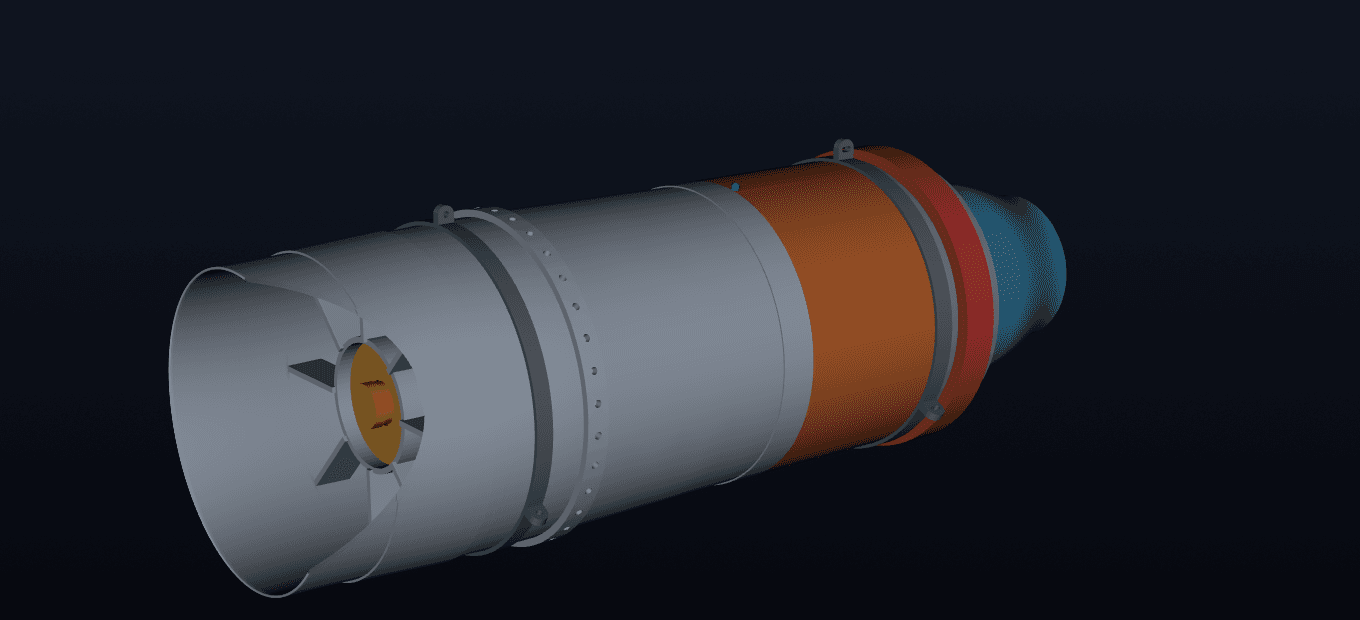
The whole engine, hash by hash
Until now the GT1 lived as separate verified solids. The compressor drum from the one-shift re-architecture, the fuel manifold that went 18 for 18, the casings, the rotors: each one measured, each one receipted, each one its own file.
Now they are one object. Forty-eight members assembled on the engine's datum, and before anyone rendered a single picture, every member's hash was checked against its receipt. That check sounds pedantic until you realize what it buys: the part in the assembly is bit-for-bit the part that passed its measurements. Not a rebuild. Not a re-export someone hopes is the same. The file you open is the evidence.
1,128 pairs, nothing undeclared
Forty-eight members make 1,128 possible pairs, and we scanned every one of them for interference. Parts that pass alone can still collide together: that is exactly the failure a full-engine scan exists to catch.
The scan knows which contacts are supposed to exist. A shaft seated on its drum, a flange closed on its casing: those are declared in advance, and the scan confirms them as intended. Everything else must be clear. The verdict came back the way you want every verdict to come back: 1,128 of 1,128 pairs scanned, zero open undeclared overlaps. The first time in this programme's history that the whole engine passed as a single object.
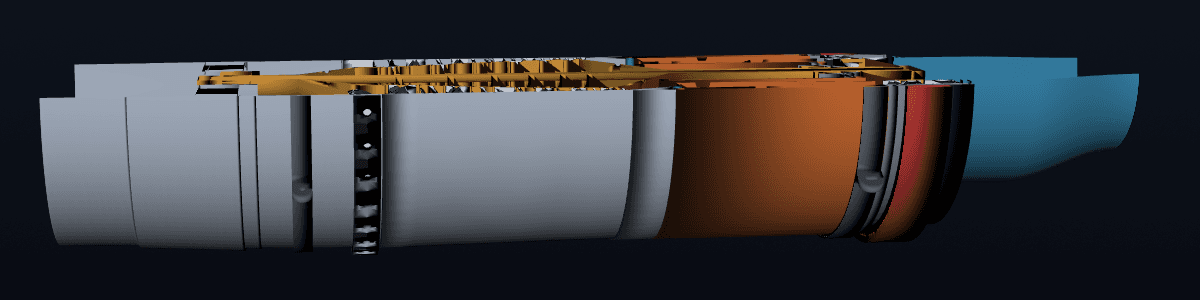
Measured from the re-imported solids, as always. Nobody eyeballed a section view and called it good.
The engine, taken apart for the camera
The exploded view is the honest portrait of what "48 members" means: casings, combustor, the bladed rotor stack, shaft hardware, each piece floating where the assembly file says it lives.
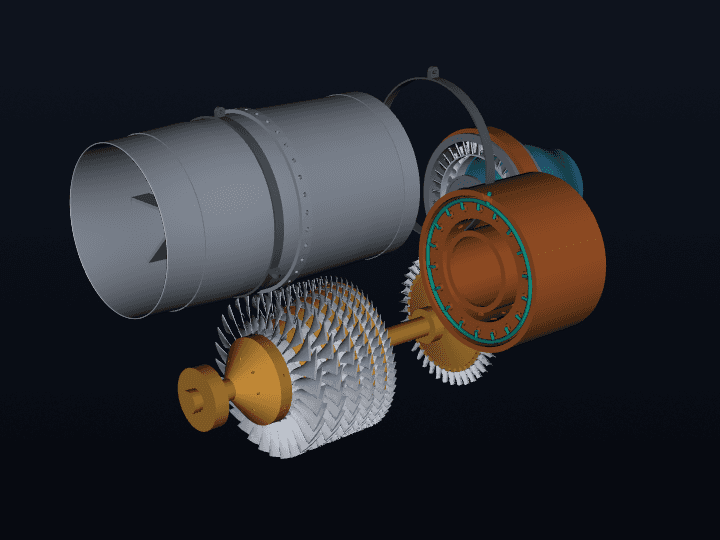
Every one of those pieces arrived with its own receipt, and the assembly they form just passed its first whole-engine gate. That is the milestone. Not a render of an engine, an engine's worth of verified geometry, in one file, with the scan record attached.
What this is not
The GT1 is a design-stage program, and this is a design milestone.
What exists is a fully measured digital assembly: geometry that carries its own measurements, with fast conservative checks run directly on the solids. The later gates govern physical release. The same receipts that let us report this result are the ones that tell us which gate comes next.
Where the small turbojet engine goes from here
From here, everything the programme does next (installation studies, further analysis, the next tier of verification) draws from the same 48 verified members instead of a drawer of diverging copies. One source, regenerated end to end, evidence included.
That is how a small turbojet engine gets designed at this pace without the pace becoming the risk: the geometry, the checks and the pictures all come from the same pipeline, so the day the engine became one object, the proof became one object too.
Follow the whole engine on the Orion page, and the pipeline that assembles and checks it on the Method page.