CAPABILITY 01: AIRFRAME
Airframes, closed around the mission.
Genesis Ventures provides UAV airframe design services as fixed-scope packages: from the mission profile you bring to sealed release geometry you can build from. The Orion-T1 is the published proof: one closed solid, a mass budget, a balance solution and six scripted 6-DoF simulation tests.
Scope
What an engagement in this capability covers, scoped against your mission profile at the requirements gate.
- Clean-sheet UAV airframes, from mission profile to sealed release geometry
- Configuration selection and trade screening against declared requirements
- Mass properties: a component-level budget that closes against the design
- Balance: solved CG placement and static margin
- Installation clearance verification: engine bay, ducts, recovery systems
UAV airframe design services close around a mission.
The airframe starts with the mission profile and the constraints that can disqualify a layout. Payload, operating envelope, launch and recovery concept, propulsion installation and balance all occupy the same geometry. Configuration selection is recorded as a trade against the brief.
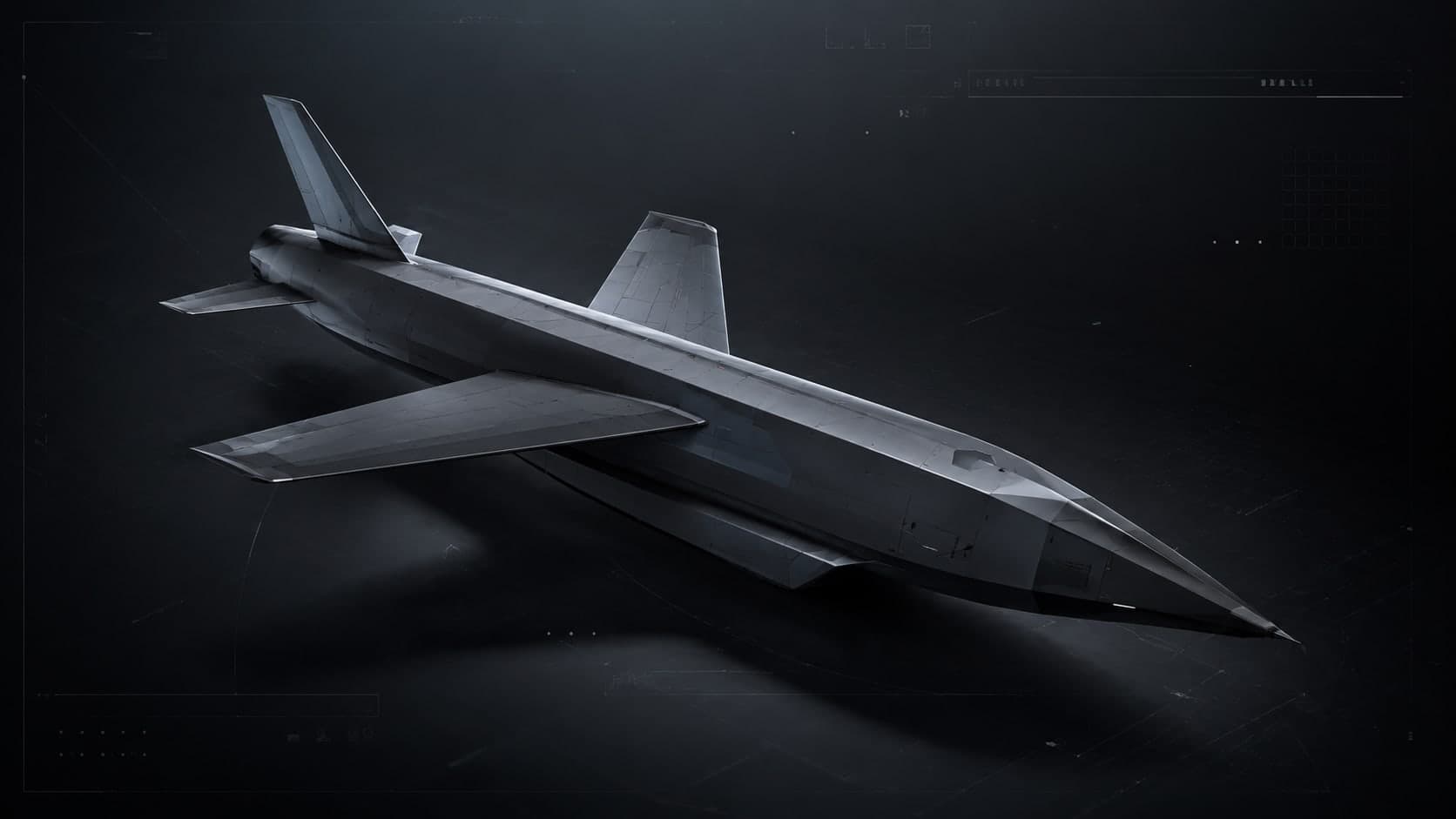
Orion-T1 is the public example. The concept uses a single-engine shoulder-wing arrangement with a blended chin inlet, a hollow area-scheduled S-duct and an aft-mounted engine. Air-launch and parachute recovery are part of the configuration. The published length is 5,100 mm, and the maximum section is 550 × 580 mm superelliptic.
The release geometry is one boolean-fused closed solid. That gives the concept one external volume for mass-property work and one installation model for clearance checks. Detailed structure, manufacturing definition and physical inspection evidence require later work.
Mass properties and balance are solved with the geometry.
The T1 mass budget names its basis by category. The skin-model structure is 204.8 kg, the engine is 165.2 kg, the declared systems budget is 171.0 kg and usable fuel is 155.5 kg. The published total closes at 696.5 kg, with an empty mass of 541.0 kg.
Balance is carried as a result in the release. The center of gravity is 2,497 mm (49.0% length) and the static margin is 0.130 MAC. The trim record reports 49.1° against 12.2° at CLmax. Those figures let a reviewer see where the concept closes and which assumptions later design stages must replace with hardware data.
A component budget exposes where mass risk sits. A declared systems allowance is different from geometry-derived structure, and the release labels that difference. If payload, fuel or equipment changes, the mass and balance solution must be reopened against the same model.
Installation checks and 6-DoF simulation screen the concept.
The engine face is located at x = 2,900 mm and the nozzle exit at x = 4,280 mm. The engine-bay record reports 15.55 mm radial, verified clearance. These values tie the propulsion installation to the airframe model before the flight-dynamics screen begins.
The scripted simulation set contains 6 cards: trim, launch separation, maximum level speed, climb, sustained turn, and fuel and thrust anchors. Each card states its condition and expectation beside the measured simulation result. The set checks whether the generated aircraft and engine deck behave consistently inside the declared model.
That screen can expose a concept that misses trim, separation behavior, a speed condition or engine-deck correlation. The receipt evaluates behavior inside the declared 6-DoF model. Structural life, control-system hardware behavior and manufacturing conformity require later-stage evidence.
Published Orion-T1 airframe specification
The reference values below come from the closed T1 concept model. A customer airframe closes against its own mission and requirement set.
| MEASURE | VALUE | BASIS |
|---|---|---|
| Length | 5,100 mm | Release geometry |
| Wing | 2.2 m² · 3.4 m span · AR 5.25 · 28° QC sweep | Published configuration |
| MTOW | 696.5 kg | Component mass budget |
| Empty | 541.0 kg | Component mass budget |
| CG | 2,497 mm (49.0% length) | Published balance solution |
| Static margin | 0.130 MAC | Published balance solution |
| Engine bay clearance | 15.55 mm radial, verified | Installation clearance check |
What you get
Each gate ends with a customer-facing deliverable. The full five-gate sequence is on how we work.
- 01A sealed release geometry as one boolean-fused closed solid
- 02A verified mass budget with a declared basis per component
- 03A balance solution: CG, static margin and trim authority, with the numbers shown
- 04Verification receipts: every figure checked against a declared threshold
Proof: Orion-T1
- One boolean-fused closed solid, 5,100 mm long
- MTOW 696.5 kg, static margin 0.130 MAC
- Six scripted 6-DoF simulation tests, six passes
Technical reading for this capability
Buyer guides and checklists tied to the same published evidence.
- Orion-T1: engine model to airframe
The public path from a closed engine release to the T1 concept.
- Turbojet and airframe integration checklist
The inlet, installation, mass and balance questions to close early.
- Concept versus detailed design and qualification
What concept geometry proves, and which questions belong to later stages.
A closed airframe with evidence you can audit.
UAV airframe design at this scope delivers concept geometry, a declared mass budget, balance results, installation checks and scripted 6-DoF simulation receipts. Each artefact stays connected to the mission requirements and model that produced it. Detailed design and later test stages build from that release with their own scoped evidence.
Bring the mission profile.
Payload, envelope, timeline, constraints: one line is enough to begin. Common questions are answered on the FAQ.
[email protected]