Orion-T1: Engine Model to Flying Airframe
How the pipeline that closed the Orion cycle designed an airframe around it and flew six scripted 6-DoF tests: objective in, sealed release out.
A one-line objective went in: design a turbojet that beats a supplied baseline on fuel burn without giving up thrust, then build the airframe around it. What came out the other end was a sealed engine release and a target drone that had already flown six scripted tests in 6-DoF simulation before any hardware existed. This is what happened in between, with the numbers we publish and nothing we don't.
The cycle-selection trail
The starting point was a supplied baseline engine: 4.2:1 overall pressure ratio, 1180 K turbine inlet temperature, 12.35 kN of thrust at a TSFC of 125.3 kg/(kN·h). The objective was to beat the fuel number while holding the thrust.
There was also a prescribed screening point (8.5:1 OPR at 1320 K) that looked like the obvious answer. It closed at 13.25 kN and a TSFC of 105.0. It missed the fuel target. This point matters more than the final design does, because it is the proof that the selection was not scripted: the model was pointed at the prescribed configuration, evaluated it honestly, published the miss, and kept searching.
The selected cycle runs 11.0:1 OPR at the same 1320 K turbine inlet temperature: 13.34 kN of sea-level static thrust at a TSFC of 99.3 kg/(kN·h), 20.8% below the baseline with more thrust, not less. The full trail, rejected point included, is published on the Orion page. Nineteen automated checks then verified the design against thresholds declared before the run, all nineteen passed.
From solution to solids
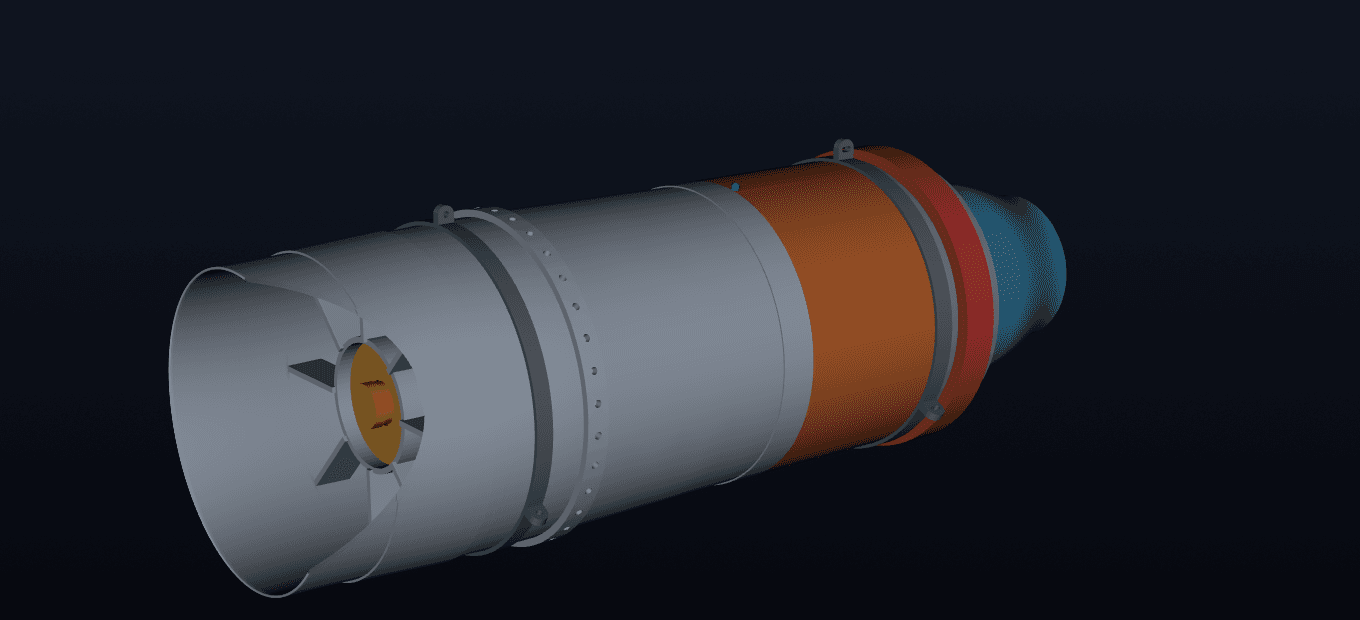
A closed cycle is still just numbers. The next step turned it into geometry: a parametric model generating the six-stage blisk compressor, annular combustor, turbine and nozzle as exact B-rep solids: 561 named solids in the final AP214 STEP assembly, from the 398-solid compressor stack down to the single-solved gas path exported as a solid in its own right.
The release mesh that comes out of that geometry is 5,252,496 triangles, machine-checked by a validator independent of the generator: zero boundary edges, zero non-manifold edges. And because the whole package is deterministic, re-executing the sealed release reproduces all nineteen checks and a byte-identical STL. The geometry you can orbit on the engine page is the design itself, generated from the closed cycle.
An airframe designed around an engine
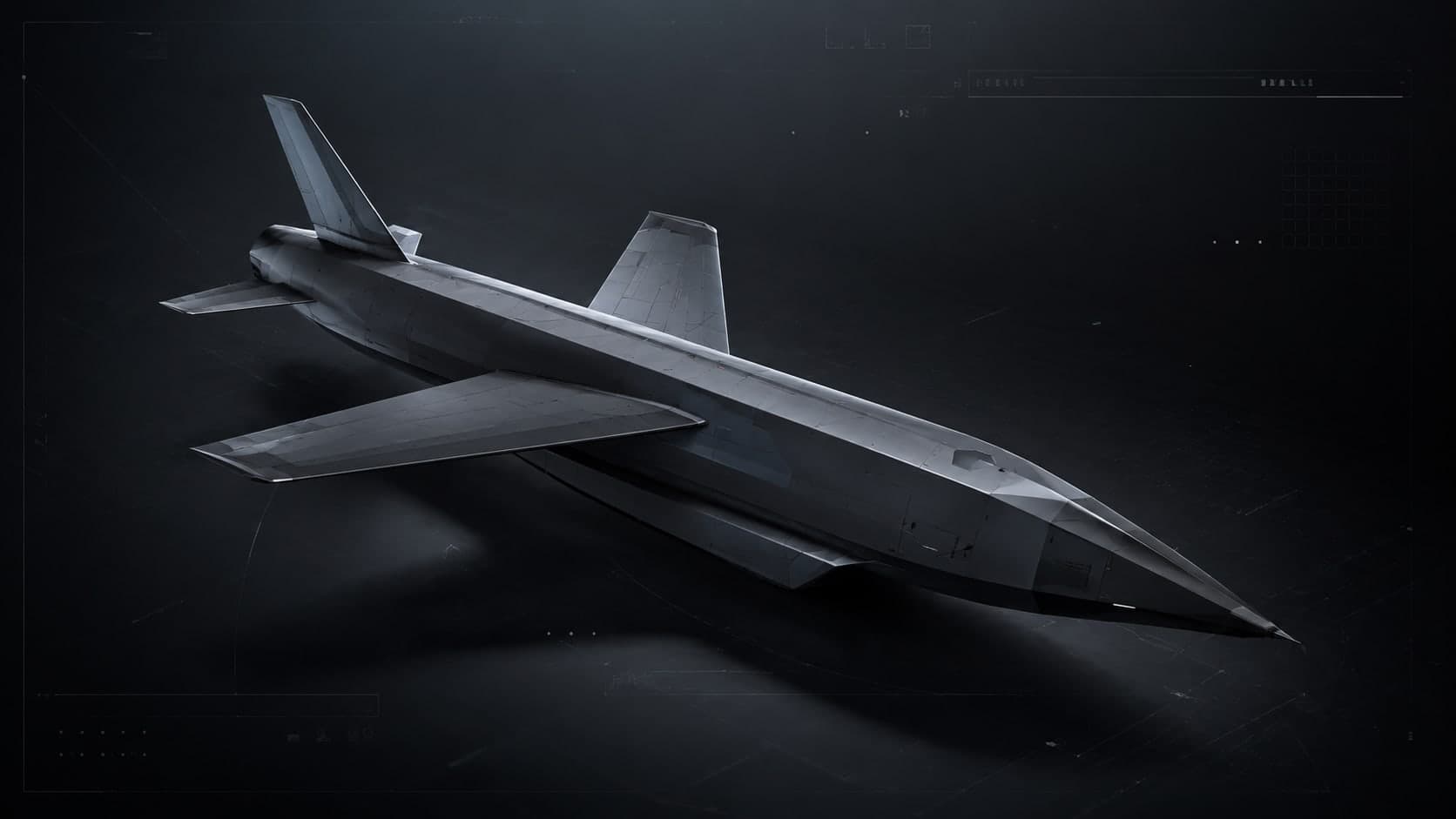
Orion-T1 started where most aircraft programs can't: with the engine already sealed, its mass, envelope and cycle deck known to four significant figures. So the airframe was closed around it rather than fitted to it.
A 13.34 kN turbojet in a 5,100 mm fuselage dictates its own architecture. The engine went aft, which meant the inlet had to come to it: a blended chin inlet feeding a hollow, area-scheduled S-duct that carries air over and around the internal volume to the engine face at x = 2,900 mm. S-ducts are where airframe programs go to be humbled (every bend is an opportunity to distort the flow the compressor face sees) so the duct was generated as part of the same geometry pipeline, and the installation was verified rather than assumed: 15.55 mm of radial engine-bay clearance, measured, with the nozzle exit at x = 4,280 mm.
The mass budget closed the same way. Structure from the skin model at 204.8 kg, the known 165.2 kg engine, a declared 171.0 kg systems budget and 155.5 kg of usable fuel sum to 696.5 kg MTOW, balancing at 49.0% of length with a 0.130 MAC static margin. No category of mass is a placeholder.
Six tests, six passes
The flight-dynamics package was generated from the same design files (thrust and TSFC as full altitude-Mach tables evaluated straight from the cycle equations, wetted areas from the CAD solids) and then flown, scripted, at 6-DoF with a 1/120 s timestep.
Two of the six tests say the most. T2, launch separation: released at 3 km and Mach 0.45, the airframe held maximum angle of attack to 1.0°, lost at most 16 feet of altitude, and was climbing at +192 fpm within 15 seconds, against expectations of α under 12°, less than 300 feet lost, positive climb. T6, fuel and thrust anchors: at cruise and two off-design points, the simulated TSFC read 129.0 against the cycle model's 128.9, with thrust errors of 2.3% and 4.1%, inside the ±10% expectation, which is what it means for the engine deck and the airframe model to agree.
Trim, max level speed (Mach 0.967 stabilized at 5 km), climb (5 km in 30.5 seconds) and sustained turn closed their expectations too. Six scripted tests, six passes. The full receipt is on the T1 page.
What a customer actually buys
The point of this story is that a single pipeline closed both sides of the vehicle: the thermodynamic cycle, the geometry, the airframe around the geometry, the mass and balance, and the flight dynamics: each stage verified against declared thresholds, the whole thing deterministic and replayable. Propulsion and vehicle are usually two vendors, two models and a thick interface document. Here they are one release.
That compression is the product. Genesis's internal design pipeline is what does it; Orion and T1 are the published proof. A customer brings a mission profile (one line is enough to start) and the same cycle runs: objective in, sealed release out.
Read the engine evidence on the Orion page, the vehicle receipt on the T1 page, and the method behind both on the Method page.