CAPABILITY 03: TARGET SYSTEMS
Targets built to be flown against.
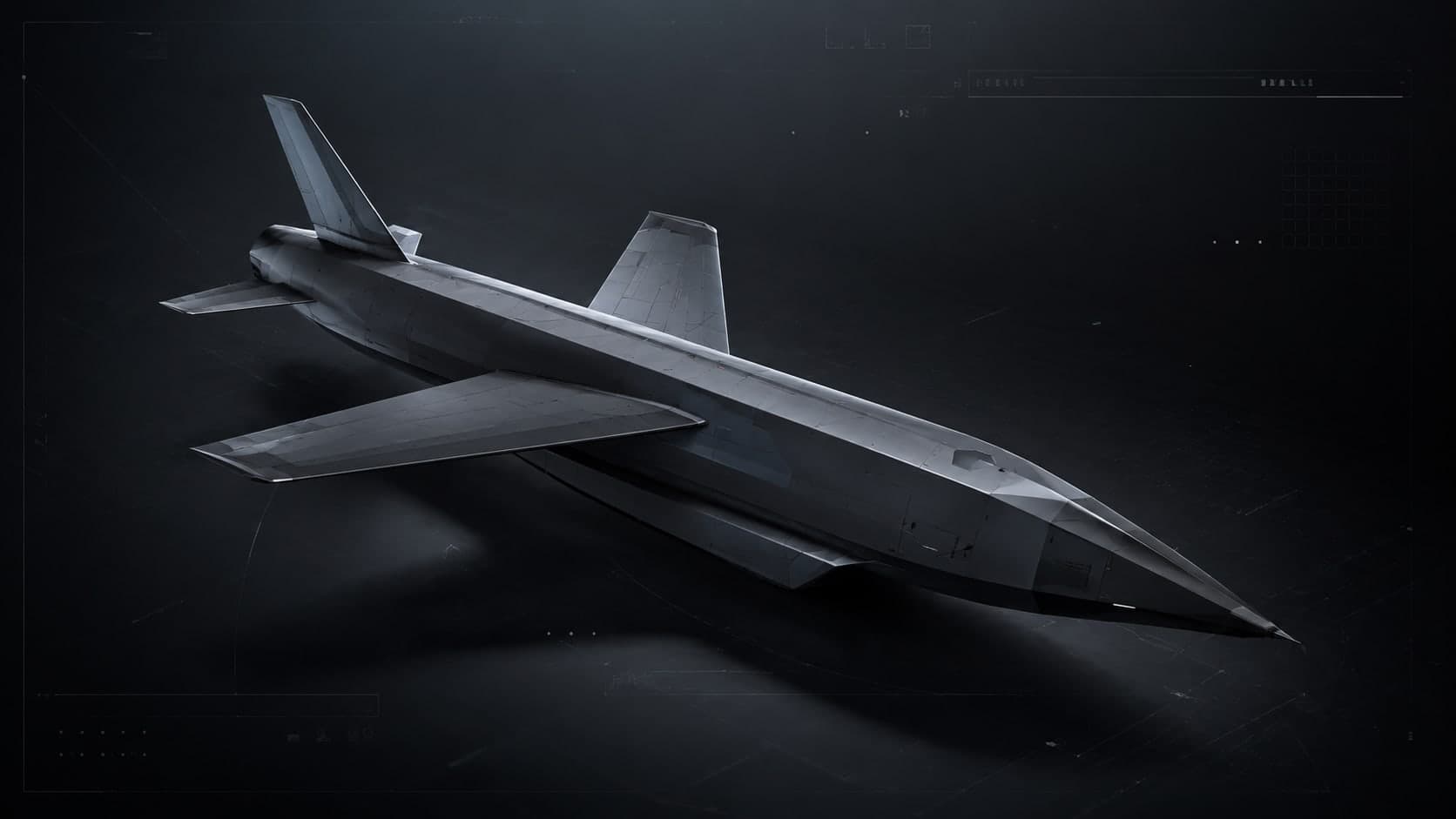
Genesis Ventures does target drone design for test & evaluation and training: recoverable platform concepts with air-launch, parachute recovery, and a 6-DoF simulation program designed before hardware exists. The Orion-T1 Block 2 concept is the published proof.
Scope
What an engagement in this capability covers, scoped against your mission profile at the requirements gate.
- Recoverable target platforms for test & evaluation and operator training
- Air-launch: separation envelopes and carrier integration
- Parachute recovery systems sized into the airframe from the start
- Flight-test program design: scripted test cards, flown in simulation first
Target drone design begins with the test objective.
A target is part of a test system. The requirement therefore starts with the decision the test must support, such as development, acceptance or operator training. The observable job follows: the speed and altitude corner, maneuver in the presentation window, and any signature or payload requirement the system under test must see.
Writing those needs before selecting an airframe prevents the vehicle from becoming the objective. The mission can then be divided into launch, climb, transit, presentation, egress and recovery. Time in the required presentation condition matters separately from total endurance, and each segment gives propulsion and control work a condition to close against.
The same brief carries launch method, recovery method, payload allowance, telemetry needs, operating environment, repeatability tolerances and the assumed treatment of attrition. Genesis scopes the concept against that requirement set and records any open requirement before configuration work.
Launch, recovery and propulsion belong in the first layout.
Orion-T1 is the published configuration example. It is a concept target drone with a blended chin inlet, hollow area-scheduled S-duct, aft-mounted engine, air-launch and parachute recovery. The airframe length is 5,100 mm, and the engine face sits at x = 2,900 mm with the nozzle exit at x = 4,280 mm.
Those choices are coupled. Air-launch makes separation a design condition. Parachute recovery reserves space and mass in the vehicle. An aft engine requires the inlet path to reach the compressor face, while the engine mass and station feed the aircraft balance. The T1 release keeps those interfaces in one airframe model.
The published mass entries are explicit: structure from the skin model, the Orion engine, a declared systems budget and usable fuel. Together they close at 696.5 kg. The balance record places the center of gravity at 2,497 mm (49.0% length) with a static margin of 0.130 MAC. These values come from the published concept model.
Scripted 6-DoF simulation makes the acceptance logic visible.
The T1 simulation receipt contains 6 cards. They cover trim, launch separation, maximum level speed, climb, sustained turn, and fuel and thrust anchors. Each card states the condition, the expected behavior and the measured simulation result before a verdict is reported.
The launch-separation card starts at 3 km / M0.45. Its measured result is max α 1.0°, max altitude loss 16 ft, ROC +192 fpm by t=15 s, against the expectation α < 12°, loss < 300 ft, positive ROC. The maximum-level-speed card at 5 km, military thrust reports stabilised Mach 0.967 against Mach ≥ 0.75.
The fuel and thrust card compares the aircraft model with the engine cycle deck. It reports TSFC 129.0 vs cycle 128.9; thrust error 2.3% and 4.1% against an expectation of within ±10% of the cycle model. This is a model-correlation check inside the concept release, recorded from 6-DoF simulation.
Published Orion-T1 concept anchors
These values show how the reference target connects configuration, balance and scripted simulation. A customer target closes against its own requirement set.
| MEASURE | VALUE | BASIS |
|---|---|---|
| Role | Concept target drone | Block 2 |
| Length | 5,100 mm | Closed airframe geometry |
| Wing | 2.2 m² · 3.4 m span · AR 5.25 · 28° QC sweep | Published configuration |
| MTOW | 696.5 kg | Published mass budget |
| Max level speed | stabilised Mach 0.967 | 5 km, military thrust |
| Launch separation | max α 1.0°, max altitude loss 16 ft, ROC +192 fpm by t=15 s | 3 km / M0.45 |
What you get
Each gate ends with a customer-facing deliverable. The full five-gate sequence is on how we work.
- 01A target platform specified against your test or training requirement
- 02A recovery and launch concept integrated into the sealed geometry
- 03A flight-test program: scripted cards with expectations declared in advance
- 04A 6-DoF simulation report: measured results against the same scripted cards
Proof: Orion-T1 Block 2
- Air-launch and parachute recovery
- Mach 0.967 max level speed at 5 km
- Six scripted 6-DoF simulation tests, six passes
Technical reading for this capability
Buyer guides and checklists tied to the same published evidence.
- Target drone requirements checklist
Start with the test decision, then define representation, profile and acceptance.
- Turbojet versus piston for target drones
Choose propulsion against the required speed and altitude corner.
- Orion-T1: engine model to airframe
How the published engine deck was carried into the T1 concept model.
A target concept with scripted simulation receipts.
Target drone concept design delivers requirements, configuration, integrated release geometry, mass and balance, plus scripted 6-DoF simulation. Orion-T1 is published at that same scope. Each simulation card carries its condition, expected result and measured model response for review.
Bring the mission profile.
Payload, envelope, timeline, constraints: one line is enough to begin. Common questions are answered on the FAQ.
[email protected]